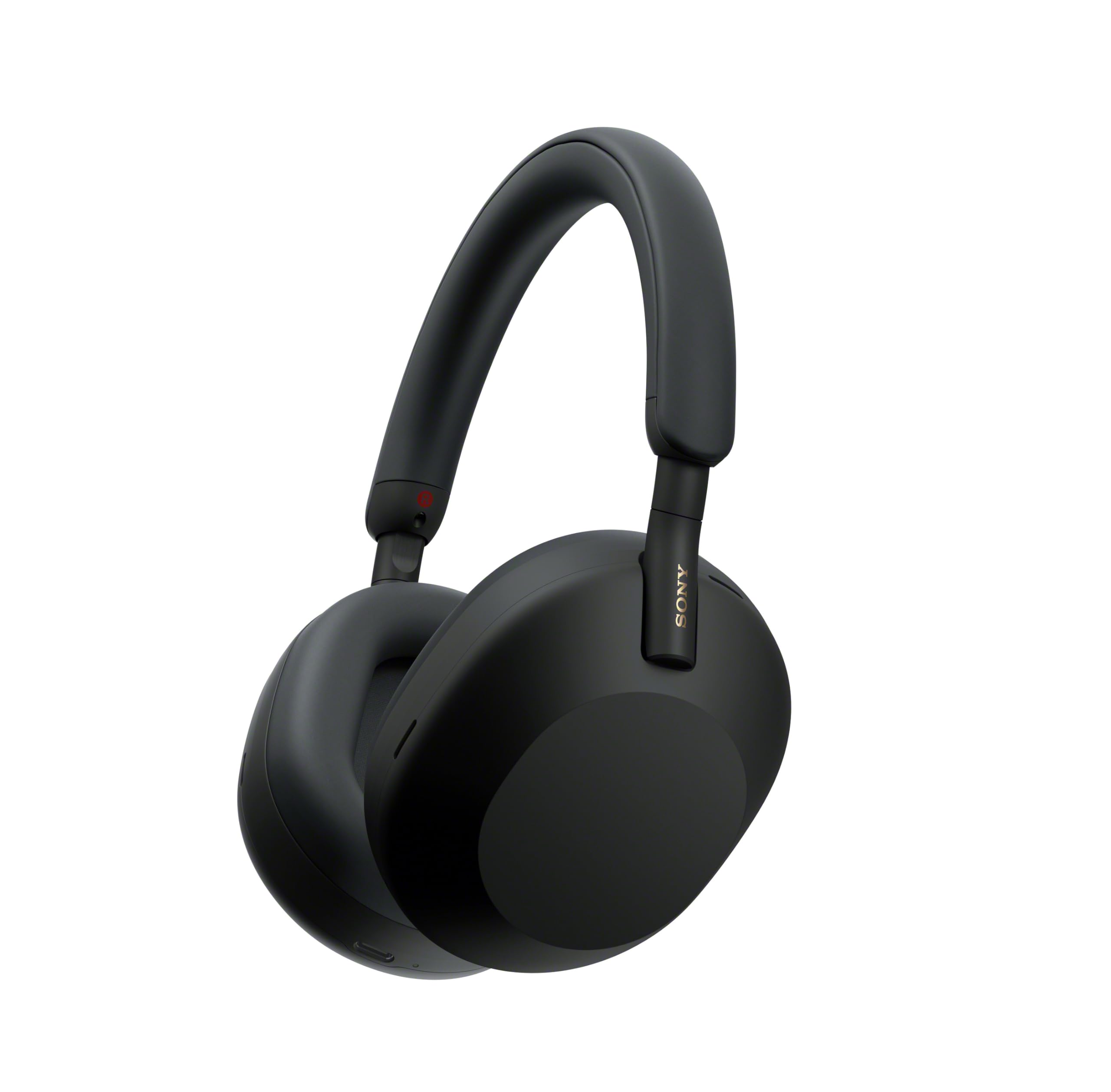
Featured product
Sony WH-1000XM5 Wireless Noise Canceling Headphones
by Sony
See current price & options at AmazonThis link opens live Amazon search results for this product, so the price and availability you see are always current. We do not list prices here.
Why it has stayed popular
Sony's WH-1000XM5 has become the benchmark for premium wireless noise-canceling headphones, building on years of refinement across the 1000X line. Reviewers consistently praise its class-leading noise cancellation, comfortable long-wear design, and rich, adjustable sound. It is the go-to recommendation for frequent travelers and open-office workers who want a polished, reliable experience rather than an enthusiast project.
Who These Headphones Fit Best
The WH-1000XM5 is aimed at people who spend serious time in noisy environments and want that noise to disappear. Commuters on trains and buses, frequent flyers, and anyone working in an open-plan office will get the most out of its strong active noise cancellation, which handles the low rumble of engines and HVAC systems especially well. It also suits listeners who value convenience: multipoint Bluetooth pairing lets you stay connected to a laptop and phone simultaneously, and the companion app offers extensive equalizer and control customization without requiring any technical know-how. If you mostly take calls, the integrated beamforming microphones are a clear step up from earbuds. On the other hand, these headphones are less ideal for people who need something pocketable, for athletes who sweat heavily, or for anyone who finds over-ear pressure uncomfortable in warm climates. They are also a poor match for studio monitoring or critical mixing, since the tuning is consumer-friendly rather than neutral. Think of them as a premium comfort-and-quietness tool for daily life, not a specialist audio instrument. If your listening happens mostly at a desk in a quiet home, the noise cancellation premium may be harder to justify, and a good pair of wired headphones at a lower tier could serve you just as well for pure sound quality per dollar spent.
What to Weigh Before Buying
The first trade-off is portability. Unlike some competitors that fold flat or collapse into a compact travel case, the XM5 has a fixed frame and only folds flat, so it takes more room in a bag. Frequent travelers who pack light should check whether the included case fits their routine. Second, consider the fit. The earcups are generously padded and most wearers report excellent multi-hour comfort, but head shape varies, and the lighter, more plastic-heavy build feels less tank-like than earlier models; treat it as a delicate premium item rather than gear you can toss around. Third, sound character: the default tuning is bass-forward and warm, which suits pop, hip-hop, and podcasts, but classical or acoustic purists may want to spend time with the app's equalizer. Fourth, ecosystem and controls matter. Touch-sensitive earcup controls are slick but can misfire in winter gloves or when adjusting your hair, and the headphones work best when you keep the companion app updated. Finally, be honest about whether you will use the noise cancellation. If you rarely encounter loud environments, you are paying for a feature that will sit idle, and the value proposition weakens considerably.
Alternatives Worth Considering
The most direct rival is Bose's flagship over-ear noise canceler, which many reviewers still rate as slightly better for airplane quietness and call clarity, with a fold-flat design that packs smaller; it is the safer pick if travel is your top priority. Apple's AirPods Max competes closely on sound quality and build, and it integrates more smoothly into the Apple ecosystem, but it is heavier and less comfortable for marathon sessions. On the value side, mid-tier options from Anker's Soundcore line and older-generation flagship models from Sony and Bose deliver most of the noise cancellation benefit at a substantially lower tier of cost, which matters if you are unsure how often you will use the feature. For listeners who prioritize sound above all else and do not need wireless or noise cancellation, wired studio headphones from Sennheiser or Audio-Technica offer better fidelity for the money. And if you find over-ears too bulky, high-end noise-canceling earbuds from Sony, Bose, and Apple have closed the gap considerably in recent generations, trading a little quietness and battery life for true pocketability. The right choice depends less on spec sheets and more on where and how you actually listen.
Frequently asked questions
Are the WH-1000XM5 good for working out or running?
They are not designed for exercise. The earpads can get sweaty and uncomfortable, the headphones are not water resistant, and the over-ear fit shifts during vigorous movement. For workouts, sport-oriented earbuds with secure fins and sweat protection are a better match. Save the XM5 for commutes, flights, desks, and quiet home listening where its strengths actually shine.
Can I use them wired when the battery dies?
Yes. A included audio cable lets you listen passively with no power, which is handy on long flights or if you forget to charge. Note that active noise cancellation and Bluetooth features do not work in wired passive mode, and the microphone for calls requires power. Sound quality is still respectable wired, though the wireless tuning is where Sony intends them to be heard.
How do they differ from the previous generation?
The XM5 brought a redesigned, lighter body with a new driver and an improved microphone array for calls, plus refined noise cancellation with additional processors. The trade-off is that it no longer folds into a compact shape, only folding flat. Whether the upgrade matters depends on how much you value call quality and comfort versus packability; the previous generation remains a strong, cheaper option if you can still find it.